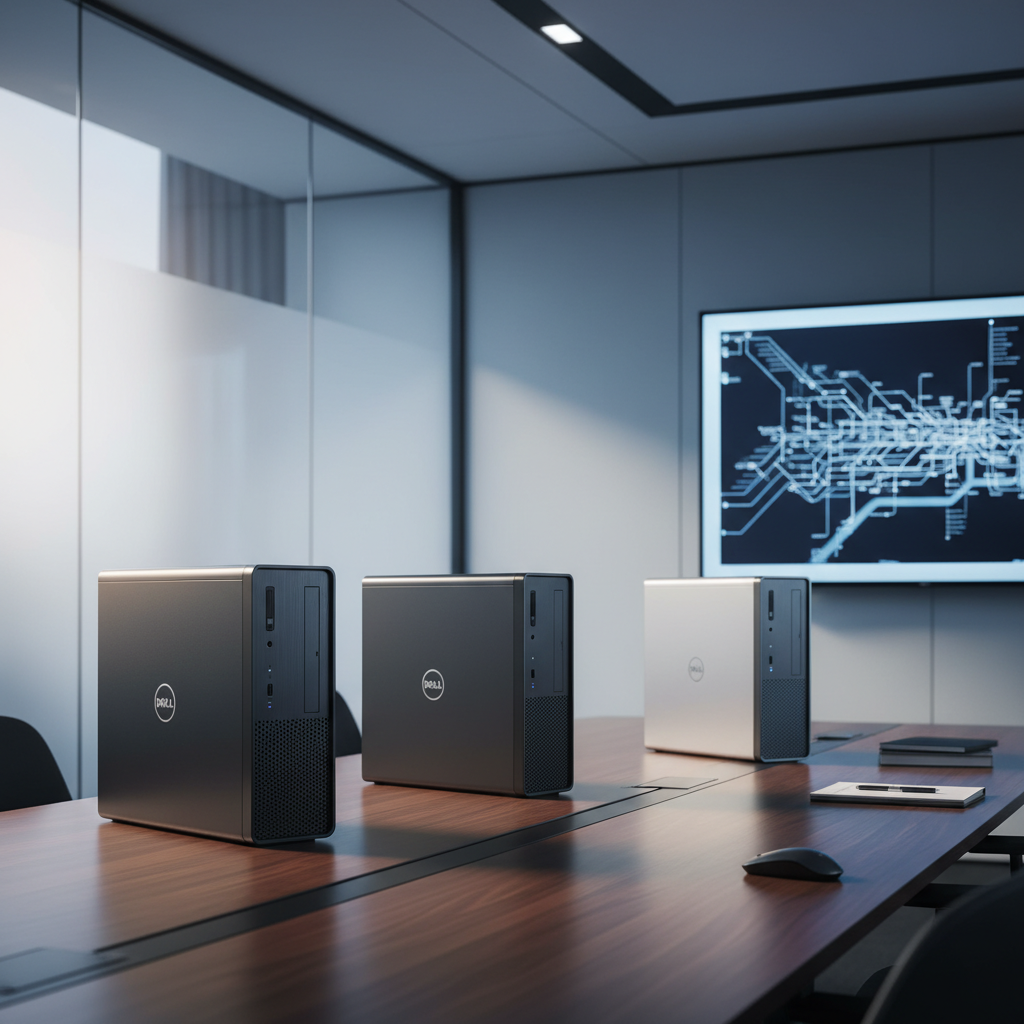
Our comparison of 13 Dell desktop models reveals the most surprising fact: the entry‑level OptiPlex 3050, priced at just $112.99, still earns a solid 4.0 / 5 rating from 300 reviewers. Yet the top‑scoring “Best Value” pick, the OptiPlex 3060, commands a higher price of $402.99 but pushes the rating up to 4.3 / 5 with over a thousand reviews, backed by 32 GB DDR4 RAM and a 3.0 GHz i5‑8500 CPU.
These models fall into three clear tiers. The budget segment includes the OptiPlex 3050, 7010, 9020 and 7040, all priced under $200 and aimed at cost‑conscious offices or home users. Mid‑range options—OptiPlex 5040 and both 5060 configurations—balance performance and price, offering up to 64 GB RAM and modern connectivity. Premium choices, such as the 3060, 5060 (i5‑8500 and i5‑8600) and 7050, sit above $300, delivering higher‑end specs like 32 GB RAM, stronger CPUs and more expansion room.
Below you’ll see how each model stacks up on price, performance and real‑world suitability, so you can pinpoint the Dell desktop that fits your needs.

Dell OptiPlex 3060
Its shallow 13.8‑in depth keeps your workspace tidy while delivering the high rating and value Dell users trust.
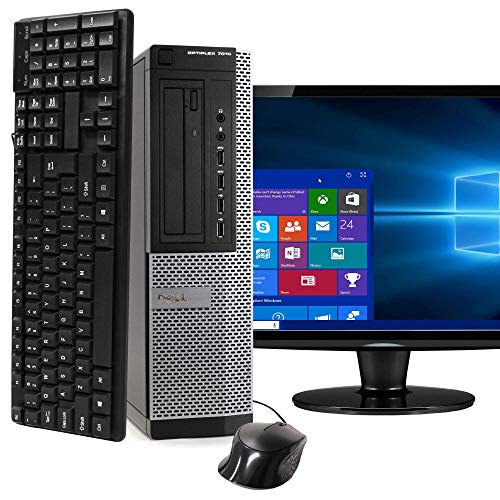
Dell OptiPlex 7010
Ideal for users needing a 19‑inch LCD and specific compatibility, it comes in at $182.90—about $220 less than the OptiPlex 3060, making it a cost‑effective technical solution.

Dell OptiPlex 5060 (i5-8500)
Stands out with a feather‑light 0.51 kg chassis, offering desktop power in a portable package for value‑conscious buyers at $303.33.
Also considered
Score Analysis
Key score advantages vs. runner-up (Dell OptiPlex 7010)
Price Range
Dell OptiPlex 3060
$408.99
Dell OptiPlex 7010
$182.90
Dell OptiPlex 5060 (i5-8500)
$294.00
Dell OptiPlex 5060
$293.99
Dell OptiPlex 3050
$209.99

Dell OptiPlex 9020
$199.49

Dell OptiPlex 5060 (i5-8600)
$389.99
Dell OptiPlex 7040
$206.67

Dell OptiPlex 7050
$424.96

Dell OptiPlex 5040
$276.67

Dell Precision Tower 3420
-$0.01

Dell OptiPlex 5050
$459.99

Dell OptiPlex 3040 Micro
$239.99
Spec Comparison
TL;DR: The Dell OptiPlex 3060 packs a six‑core i5‑8500, 32 GB DDR4 RAM and a 1 TB SSD into a compact Mini‑Tower for $402.99, earning a solid 4.3‑star rating from over a thousand reviewers.
At the heart of the OptiPlex 3060 sits an Intel Core i5‑8500 with a 3.0 GHz base clock, 4.1 GHz turbo boost, 6 cores, 6 threads and a 9 MB L3 cache. Paired with 32 GB DDR4 RAM running at 2666 MHz and a 1 TB SSD, the machine delivers smooth multitasking for office suites, browsers and development tools. The integrated Intel UHD Graphics 630 can tap up to 1.7 GB of shared memory and supports 4K resolution via HDMI 1.4 or DisplayPort 1.2.
Compared with other Dell desktops in this roundup, the 3060 is lighter than the OptiPlex 5040 (13.0 lb) but a touch heavier than the OptiPlex 5060 (i5‑8600) at 11.21 lb. Its 13.8 in depth and 6.0 in height make it shorter than the OptiPlex 7050, which stands 11.4 in tall, while its 10.8 in width is wider than the 7050’s 3.6 in profile. The 3060 offers only 2 DIMM slots, whereas the OptiPlex 5060 (i5‑8500) provides 4 slots for future memory upgrades. Power‑wise, its 260 W supply and 85 % efficiency edge out the OptiPlex 5050’s 240 W unit, though the 5050’s maximum memory capacity of 64 GB surpasses the 3060’s 32 GB limit.
Users consistently praise the machine’s instant boot times, quiet operation, and the ease with which they swap components thanks to the Mini‑Tower chassis. Professional reviewers note the “true six‑core power” of the i5‑8500 and commend the solid build quality and manageability features. The main criticism targets the integrated graphics, which don’t handle gaming or GPU‑intensive workloads, and the modest 90‑day warranty that leaves power users wanting longer coverage.
Beyond the core specs, the OptiPlex 3060 includes Bluetooth 4.2/5.0, a Gigabit Ethernet port, four USB 2.0 and four USB 3.1 Gen 1 ports, and optional Wi‑Fi adapters. Two M.2 slots support NVMe or SATA drives, giving you flexibility for future storage expansions. The system also ships with an RGB lighting kit offering 13 modes, and Dell’s free tech support and award‑winning customer service back the purchase.
Pros
Cons
Best for: Buyers willing to invest in a proven, high‑quality option
Avoid if: You need advanced features or professional‑grade performance
TL;DR: The refurbished Dell OptiPlex 7010 offers a 3.2 GHz quad‑core i5, 8 GB DDR3, 500 GB HDD and a 19‑inch monitor for $182.90, making it a solid, budget‑friendly office desktop.
The core of the 7010 is an Intel Core i5‑3450 that runs at a 3.2 GHz base clock and can boost to 3.6 GHz, backed by 6 MB of cache and a 65 W TDP. It ships with 8 GB of DDR3 SDRAM clocked at 1600 MHz, and the motherboard supports up to 16 GB. Storage is a 500 GB 7200 RPM SATA HDD, and the integrated Intel HD Graphics 2500 has a 650 MHz base clock with a 1.1 GHz turbo boost.
At 28.99960594348 pounds, the 7010’s chassis is considerably heavier than the 9020’s 14.3‑pound frame and far bulkier than the 3040 Micro’s 2.82‑pound, 178 mm‑deep design. Its depth of 406.40 mm and height of 360.68 mm also outsize the compact dimensions of the 3040 Micro (178 mm × 183 mm). Compared with the 5050‑class peers, the 7010 provides two PCIe x1 slots and one full‑height PCIe x16 slot, offering more expansion flexibility than the 7040’s half‑height x16 slot.
Users repeatedly note the platform’s reliability and tool‑less serviceability, traits that Dell’s business‑grade OptiPlex line has earned a reputation for. Reviewers appreciate the included keyboard, mouse and 19‑inch LCD, but many mention fan noise under load and the fact that the 2012‑era i5‑3450 lacks modern instruction sets. The system also lacks built‑in Wi‑Fi, requiring an add‑on card, and its DDR3 memory is now a legacy technology.
Professional reviewers point out the modular design, the energy‑efficient 180 W (or optional 300 W) power supply, and the presence of Bluetooth 5.3. The Windows 11 Pro operating system readies the machine for current office software, while the dual DisplayPort 1.2 and VGA outputs cover most monitor setups.
Pros
Cons
Best for: Small businesses, home offices, and budget‑focused users who need a dependable machine for email, web browsing, and video calls.
Avoid if: You need powerful performance, modern DDR4 memory, robust graphics, or a system built for gaming and heavy multimedia editing.
TL;DR: The Dell OptiPlex 5060 MT packs a 6‑core i5‑8500, 16 GB DDR4 RAM and dual‑drive storage in a compact 8‑inch mini‑tower for $303.33, offering solid business performance with enterprise‑grade security.
This model’s standout spec is the 6‑core Intel Core i5‑8500, running at a 3.0 GHz base clock and boosting up to 4.1 GHz, paired with 16 GB of DDR4 RAM across four slots and a 9 MB cache. The system also ships with a 500 GB SSD plus a 1 TB HDD, giving you fast OS loads and ample space for files.
Compared with the other 12 OptiPlex units in the roundup, the 5060 MT is noticeably lighter – at just 0.51 kg it undercuts the 5.25 kg weight of the peer‑listed 5060 (B0FG2WG7DM) and is lighter than the 13‑pound 5040, the 11‑pound 5060 (i5‑8600) and the 14‑pound 9020. It also sits at a shorter 8 in height versus the 11.5 in height of that same 5060 peer, making it one of the more space‑efficient towers. Memory capacity is double the 8 GB installed in the 5040, and the 4‑slot design matches the 7040 while offering the same 64 GB maximum.
Users consistently praise the system for “fast, smooth performance” in everyday tasks and appreciate the pre‑installed Windows 11 OS. Professional reviewers note the i5‑8500’s 3.0 GHz base and 4.1 GHz turbo speeds and the quiet, low‑power 260 W proprietary supply. Common complaints revolve around occasional defective units, low‑quality SSDs in some batches, and the need for a DisplayPort‑to‑HDMI adapter because the motherboard lacks an HDMI port.
Technical extras include Intel UHD Graphics 630 with two DisplayPort 1.2 outputs, Bluetooth (version not specified) and Wi‑Fi 6E support, a full set of connectivity (4 × USB‑A 2.0, 5 × USB‑A 3.0, 1 × USB‑C 10 Gbps), and enterprise‑grade security via TPM 2.0 and a Kensington lock. The proprietary 260 W PSU, however, means you’ll need to replace it for any high‑end GPU upgrade.
Pros
Cons
Best for: Value-conscious buyers seeking quality at $303.33
Avoid if: You have limited desk space or need portability
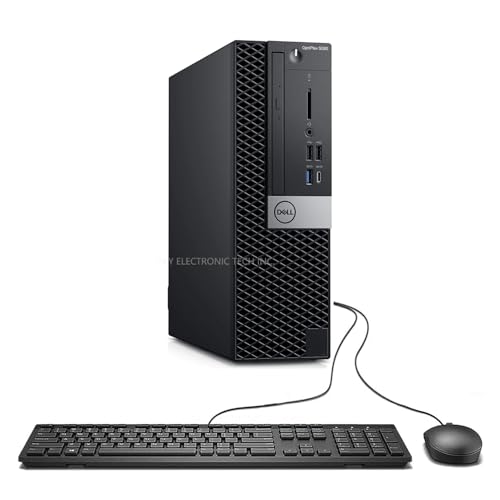
TL;DR: The Dell OptiPlex 5060 SFF delivers a hexa‑core i5‑8500, 16 GB DDR4 memory and NVMe storage in a compact 289 mm deep chassis for $293.99, making it a solid mid‑range business desktop.
At the core is an Intel Core i5‑8500 processor with a 3.0 GHz base clock, 4.1 GHz turbo, six cores, six threads and a 9 MB cache, paired with 16 GB of DDR4 RAM running at 2666 MT/s. The system includes a 512 GB SSD and supports additional NVMe drives via two M.2 slots, giving you fast storage right out of the box.
The 5060 weighs more than the ultra‑compact Dell OptiPlex 3040 Micro (about 2.82 lb) yet remains lighter than the Dell OptiPlex 5060 (i5‑8500) variant, which tips the scales at just 0.51 kg. Its 289.6 mm depth also exceeds the 3040 Micro’s 178 mm depth, while still fitting comfortably on a small office desk.
Professional reviewers praise the machine’s quiet operation, easy tool‑less access and abundant I/O—including USB‑C, dual DisplayPort and a 1 Gbps Ethernet port. Users appreciate the smooth Windows 11 experience after upgrading RAM and storage, though many note the absence of an HDMI port, the limited single 3.5″ drive bay, and a proprietary 200 W power supply that caps GPU upgrades at 75 W.
Pros
Cons
Best for: Buyers in the mid price range seeking the best quality at that price point
Avoid if: You need advanced features or professional‑grade performance
TL;DR: The Dell OptiPlex 3050 SFF delivers a compact 292 mm depth business desktop with up to 32 GB DDR4 RAM, dual storage and low‑profile GPU support for just $112.99, earning a solid 4‑star rating.
The machine packs a 3.2 GHz base‑clock quad‑core processor, 6 MB L3 cache and up to 32 GB of DDR4 memory at 2133 MT/s (or 2400 MT/s on 7th‑gen CPUs). Its footprint measures 292 mm × 289 mm × 94 mm and it weighs 5140 g, making it easy to slip under a desk or into a 6U vertical rack. Power efficiency rates 85 % for the Bronze PSU (180 W) and 92 % for the Platinum option (240 W).
Compared with other Dell models in this roundup, the OptiPlex 3050 is notably lighter than the OptiPlex 7010, which tips the scales at about 28.9996 pounds, and it’s narrower than the 7010’s 101.60 mm width. Its depth of 292 mm also sits well below the 457.2 mm depth of the OptiPlex 7040. Memory‑wise, the 32 GB ceiling doubles the 16 GB maximum that the 7010, 9020 and 3040 Micro offer, while its dual‑storage capacity (2 TB HDD, 512 GB SSD) outpaces many peers that list only a single drive option.
Users consistently praise the tiny chassis for quiet, 24/7 office use and the ease of upgrading RAM or adding a low‑profile GPU such as an AMD Radeon RX 6400. Professional reviewers highlight its excellent rack compatibility (6U vertical, 2U horizontal) and serviceable design. The most common complaints revolve around the proprietary power supply limiting higher‑wattage GPU upgrades, occasional thermal throttling and noise under load, and the lack of built‑in Wi‑Fi, which requires the supplied USB adapter.
Pros
Cons
Best for: Buyers in the budget price range seeking the best quality at that price point
Avoid if: You need advanced features or professional‑grade performance
TL;DR: The Dell OptiPlex 9020 offers a 3.2 GHz 4th‑gen Intel Core i5, up to 32 GB DDR3 RAM, and a 500 GB 7200 RPM HDD for $220, making it a solid, budget‑friendly business desktop.
The core of the 9020 is the Intel Core i5‑4570, which runs at a 3.2 GHz base clock and can boost to 3.6 GHz, backed by a 6 MB cache. Integrated Intel HD Graphics 4600 starts at 350 MHz and can reach 1.2 GHz, while optional discrete GPUs such as the AMD Radeon HD 8570 or NVIDIA GeForce GTX 645 add a graphics upgrade path. The machine ships with 8 GB of DDR3‑1600 RAM and supports up to 32 GB across four DIMM slots.
At 14.3 pounds, the OptiPlex 9020 is heavier than the ultra‑compact OptiPlex 3040 Micro (2.82 lbs) but lighter than the older OptiPlex 7010 (nearly 29 lbs) and a bit lighter than the OptiPlex 7040 (12.0 pounds). Its 292 mm height and 290 mm length place it between the micro form factor and larger tower models, offering more expansion room than the 3040 Micro while still fitting in modest office desks. Expansion includes a full‑height PCIe x16 slot, a PCIe x16 (x4 wired) slot, and a PCIe x1 slot for the Mini‑Tower, plus a Mini PCIe slot on USFF models. USB connectivity is generous, with up to six USB 3.0 ports on the Micro version and up to eight USB 2.0 ports on the Mini‑Tower.
Professional reviewers praise the 9020’s compact footprint for space‑constrained offices and its tool‑less design that makes RAM, storage, and add‑in cards easy to swap. Users consistently note the system’s reliability for 24/7 operation, thanks to the Intel I217‑LM Gigabit Ethernet and solid chassis intrusion detection. The main drawbacks are the aging 4th‑gen CPU architecture, DDR3‑only memory, and the lack of M.2 NVMe storage, which limit performance for modern workloads and make the unit feel pricey relative to its speed.
Pros
Cons
Best for: IT departments or small businesses that need a reliable, serviceable desktop on a tight budget.
Avoid if: You need cutting‑edge performance, DDR4/NVMe storage, or a silent workstation for graphics‑intensive tasks.
TL;DR: The Dell OptiPlex 5060 MT packs an 8th‑Gen i5‑8600, up to 64 GB RAM and a 260 W PSU in a compact 10.8‑in deep mini‑tower for $359.99, offering solid business performance with modest upgrade room.
What really stands out is the 3.1 GHz base clock that can boost to 4.3 GHz, and it includes a 9 MB L3 cache and a 65 W TDP CPU. The chassis measures 10.8 in deep, 13.8 in high and 6.1 in wide, weighing about 17.49 lb, so it fits nicely on a desk while still feeling sturdy.
Compared with its peers, this model is heavier than the OptiPlex 3060 (which tips the scales at 11.88 lb) but offers twice the memory capacity—64 GB versus the 3060’s 32 GB max—and double the DIMM slots (four versus two). It also outpaces the OptiPlex 7050’s GPU power ceiling; the 5060 supports dedicated graphics up to 125 W, whereas the other 5060 variant that the roundup lists caps at 75 W.
Reviewers consistently note the quiet operation and the convenience of pairing a 500 GB SSD with a 1 TB HDD for speed and storage. Professional reviewers highlight the “excellent upgrade potential” because it has a full‑size PCIe x16 slot, while everyday users flag the lack of an HDMI port and the proprietary 260 W power supply as hurdles for higher‑end GPU swaps. Some also mention BIOS quirks that affect Windows Defender.
Pros
Cons
Best for: Those prioritizing quality and willing to pay for premium performance
Avoid if: You're shopping on a tight budget — it's priced at $359.99
TL;DR: The Dell OptiPlex 7040 SFF delivers a quad‑core i5, up to 64 GB RAM and a 256 GB SSD in a compact 12.0pounds chassis for $246.67, ideal for secure office workspaces.
The standout spec is the fourth‑generation Intel Core i5‑6500 processor with a 3.2 GHz base clock, 6 MB cache and four cores, paired with 16 GB of DDR4‑2133 RAM that can be expanded to 64 GB across four DIMM slots. Its 256 GB SSD and optional M.2 slot give you fast storage in a 289.56 mm deep, 292.1 mm high, 91.44 mm wide small‑form‑factor case.
Compared with its siblings, the 7040 is heavier than the ultra‑light 3040 Micro’s 2.82 lb chassis but lighter than the 9020’s 14.3 pounds and the 5040’s 13.0 pounds. It shares a similar footprint with the 5060 (both about 289 mm deep and 292 mm high) and offers more expansion than the 3040 Micro, which only lists a single M.2 slot for wireless use. Its maximum RAM capacity of 64 GB outstrips the 3040 Micro’s 16 GB limit and matches the 5060’s 64 GB ceiling.
Reviewers note the machine’s enterprise‑grade manageability – vPro support, Dell ControlVault and upgradable TPM 1.2/2.0 – making it a solid option for office IT departments. Users love the compact size and easy RAM/SSD upgrades, but they frequently mention the proprietary 180 W power supply as a bottleneck for any serious GPU upgrade, and the system can become noisy and run hot under sustained load. Lack of built‑in Wi‑Fi means you’ll need an add‑on card if you want wireless connectivity.
On the graphics side, the integrated Intel HD Graphics 530 runs at a 350 MHz base and 1,050 MHz boost, supporting DirectX 12, OpenGL 4.4 and up to three displays via two DisplayPort 1.2 and one HDMI 1.4 ports. Connectivity is generous with six USB 3.0 ports, four USB 2.0 ports, a serial port, RJ‑45, and optional Bluetooth 4.1.
Pros
Cons
Best for: Value-conscious buyers seeking quality at $246.67
Avoid if: You need advanced features or professional‑grade performance
TL;DR: The Dell OptiPlex 7050 SFF packs a 3.6 GHz i7‑7700, 32 GB RAM and a 1 TB SSD into a 11.5‑in deep, 12.17‑lb chassis for reliable office work, but its proprietary 180 W PSU and lack of built‑in Wi‑Fi limit upgrades.
The standout hardware is the 7th‑gen Intel Core i7‑7700 with a 3.6 GHz base clock, 4.2 GHz turbo, 4 cores, 8 threads and an 8 MB cache. It comes with 32 GB of DDR4‑2133/2400 memory already installed and can be expanded to 64 GB, while the 1 TB SSD lives alongside a single M.2 slot that supports NVMe speeds of up to 4 GB/s.
Compared with other OptiPlex models in this roundup, the 7050 is a bit heavier than the OptiPlex 5060 SFF (11.21 lb) but lighter than the OptiPlex 5050 (12.0 lb). Its depth of 11.5 in is shallower than the OptiPlex 3060’s 13.8 in, yet its height of 11.4 in matches the 5060 SFF. Memory‑wise, it tops the OptiPlex 3060, which maxes out at 32 GB, by supporting up to 64 GB.
User sentiment highlights the machine’s rock‑solid reliability and smooth multitasking thanks to the ample RAM and fast SSD. Professionals note the compact footprint and the inclusion of dual DisplayPort, HDMI and a USB‑C port as big wins for dual‑monitor setups. The most common complaints revolve around audible fan noise under load, the absence of built‑in Wi‑Fi, and the 180 W proprietary power supply that restricts high‑performance GPU upgrades.
Pros
Cons
Best for: Office workers, call‑center or kiosk deployments, and home offices that need a compact, high‑performance machine with plenty of memory and fast storage.
Avoid if: You need built‑in Wi‑Fi, plan to install a high‑end graphics card, or are on a very tight budget.
TL;DR: The Dell OptiPlex 5040 SFF delivers a 3.30 GHz 6th‑Gen i5, up to 16 GB DDR3L‑1600 RAM and three‑monitor support in a 13‑lb chassis that fits neatly under a 23.8‑inch display.
The chassis measures 482.6 mm deep, 177.8 mm high and 406.4 mm wide, weighing 13.0 pounds, so it'll slot comfortably beneath a typical office monitor while still offering room for upgrades. Its Intel Core i5‑6600 runs at a base clock of 3.30 GHz and ships with 8 GB of DDR3L memory clocked at 1600 MHz, expandable to a maximum of 16 GB.
Compared with other Dell OptiPlex models in this roundup, the 5040 is heavier than the ultra‑light 3040 Micro (2.82 lb) but lighter than the older 9020 (14.3 lb). Its depth of 482.6 mm exceeds the 5060 SFF’s 289.6 mm and the 5060 i5‑8600’s 91.4 mm SFF depth, while its height of 177.8 mm is shorter than the 5060 SFF (292.1 mm) and the 5060 i5‑8500 (203 mm). Width‑wise it sits between the narrow 5060 (94.0 mm) and the wider 5060 i5‑8500 (457 mm).
Reviewers say everyday office users appreciate the tiny footprint, the smooth handling of typical Office and web tasks, and the ease of adding RAM or a 256 GB SSD. Common complaints focus on the lack of built‑in Wi‑Fi, fan noise that can grow louder over time, and the fact that the system relies on older DDR3L memory and modest integrated graphics, which limits its appeal for graphics‑intensive work.
Technically, it includes an integrated Intel i219‑V Gigabit LAN, optional Bluetooth 4.1, and optional AMD Radeon R5 340X or R7 350X low‑profile GPUs. It supports up to three simultaneous monitors via two DisplayPort 1.2 outputs and one HDMI 1.4 port. Storage options range from a 256 GB SSD to a 1 TB 7200 RPM HDD, and the 180 W power supply meets an 80 PLUS Bronze (85 % efficiency) rating. Dell backs the unit with a three‑year limited hardware warranty.
Pros
Cons
Best for: Most users seeking a balanced, mainstream option
Avoid if: You need the latest connectivity like USB‑C or high‑end graphics performance
TL;DR: The Dell Precision 3420 SFF packs a quad‑core i5, 16 GB DDR4, and a 512 GB NVMe SSD into a 457 mm deep, 9.1‑lb chassis, offering ISV‑certified reliability for professional workloads.
The tower’s most eye‑catching attribute is its compact size: a depth of 457.2 mm, height of 152.4 mm and width of 355.6 mm keep it well under a foot wide, while the whole unit weighs 9.1 pounds. Inside, a 3.2 GHz Intel Core i5‑6500 (turbo up to 4.0 GHz) drives four cores and four threads, paired with 16 GB of DDR4 RAM running at 2133 MHz.
Compared with other Dell models in this roundup, the Precision 3420 is heavier than the ultra‑light OptiPlex 3040 Micro (2.82 lb) but lighter than the bulkier OptiPlex 7010 (about 29 lb). Its depth of 457 mm exceeds the OptiPlex 3050’s 292 mm, yet it still fits comfortably on a standard desk. Memory‑wise, it supports up to 64 GB across four slots—matching the OptiPlex 7040’s maximum but offering more slots than the OptiPlex 3050, which only has two.
Users highlight the machine’s quiet operation and reliability, with professionals noting the ISV certifications for AutoCAD, SolidWorks, and Adobe Creative Suite as a major confidence boost. Reviewers also appreciate upgrading RAM and storage, though the tight interior can make upgrades feel cumbersome. Security‑focused buyers note the built‑in TPM 2.0, Dell Data Protection and chassis intrusion detection.
Technical extras include a 180 W 80 PLUS Bronze power supply, a 512 GB PCIe NVMe SSD for fast boot and load times, and a solid array of ports: two front USB 2.0, two front USB 3.0, four rear USB 3.0, HDMI 1.4, DisplayPort 1.2, a headphone/microphone combo, and a Gigabit Ethernet jack. The system ships with Windows 11 Pro and comes with a 90‑day warranty.
Pros
Cons
Best for: Professionals who need a space‑saving workstation with ISV‑certified stability for CAD, 3D design, or data‑intensive applications.
Avoid if: You need high‑end modern GPUs for intensive 3D rendering, gamers, or users who prioritize easy DIY upgrades.
“Runs AutoCAD and Revit smoothly with i7 and Quadro K1200.”
“Takes up almost no desk space but handles my engineering simulations.”
TL;DR: The Dell OptiPlex 5050 bundles a 3.4 GHz i7‑6700, 32 GB DDR4 at 2133 MHz, and a 512 GB NVMe SSD in a compact mini‑tower for $469.99, but its older CPU and lack of USB‑C keep it from being future‑proof.
This model’s most eye‑catching spec is the 6th‑gen Intel Core i7‑6700 processor with a 3.4 GHz base clock, 8 MB cache and eight threads, paired with 32 GB of DDR4 memory running at 2133 MHz. A fast 512 GB M.2 NVMe SSD provides storage, and the bundled 24‑inch monitor delivers a full‑HD 1920 × 1080 picture.
At $469.99 the 5050 sits at the higher end of the lineup. It weighs 12.0 pounds, making it slightly lighter than the OptiPlex 7050 (12.17 pounds) but a bit heavier than the OptiPlex 3060 (11.88 pounds). Its chassis measures 431.8 mm deep, 177.8 mm high and 330.2 mm wide, which is deeper than the 7050’s 292.1 mm depth, shorter than its 289.6 mm height, and considerably wider than the 7050’s 91.4 mm width.
Professional reviewers praise the modular design for easy upgrades and the inclusion of a Wi‑Fi 6 AX200 card that tops out at a 3000 Mbps data rate. Users appreciate the quiet operation and the ability to add a dedicated GPU, but many note that Microsoft hasn't officially certified the 6th‑gen CPU for Windows 11, and the 240 W power supply limits high‑end graphics cards. The lack of USB‑C ports also appears as a common drawback for future‑proofing.
Pros
Cons
Best for: Home office users, small businesses, or students who need a reliable, upgradeable workstation and are willing to pay a premium for solid build quality.
Avoid if: You need a budget‑friendly system, a Windows 11‑certified CPU, or extensive graphics performance — it’s priced at $469.99.
TL;DR: The Dell OptiPlex 3040 Micro packs an i5‑6500T, 8 GB RAM and a 256 GB SSD into a 1.4‑in‑wide, 2.82‑lb case for $239.99, making it a space‑saving desktop for basic business tasks.
This mini‑tower’s most eye‑catching spec is its size: at just 1.4 in (36 mm) wide, 7.2 in (183 mm) high and 7 in (178 mm) deep, it fits on a crowded desk or behind a monitor. Inside, an Intel Core i5‑6500T delivers a 2.5 GHz base clock (up to 3.1 GHz Turbo) and the system ships with 8 GB DDR3L‑1600 MHz RAM, a 256 GB SATA SSD and an integrated Intel HD Graphics 530.
At $239.99 the 3040 Micro lands near the low‑end of the 13‑product lineup. It’s dramatically lighter than the Dell OptiPlex 7040’s 12.0‑pound chassis and the OptiPlex 9020’s 14.3‑pound frame, which can matter for rack‑mount or wall‑mount installations. However, the 3040 lacks the M.2 slot and PCIe expansion that the 7040 lists, so its upgrade path is narrower than some of the larger peers.
Professional reviewers praise its “generous port selection” and “strong performance for business tasks,” noting the PCMark 8 Work Conventional score of 3087 points. Everyday users love the tiny footprint and quiet operation, but many flag the absence of built‑in Wi‑Fi and the reliance on a SATA SSD rather than a faster NVMe drive. The 90‑day warranty also feels short compared with typical three‑year business guarantees.
Beyond the basics, the machine runs on a 35 W TDP processor and draws power through a 65 W external adapter that meets a minimum 87 % efficiency rating. You get four USB 3.0 ports (two front, two rear), two USB 2.0 ports, HDMI 1.4, DisplayPort 1.2 and a universal headset jack, which a TPM 2.0 security chip backs for enterprise environments.
Pros
Cons
Best for: Entry‑level buyers or those on a tight budget
Avoid if: You need advanced features or professional‑grade performance
Breakdown
Dell OptiPlex 3060
Pros
Dell OptiPlex 7010
Pros
Dell OptiPlex 5060 (i5-8500)
Pros
Dell OptiPlex 5060
Pros
Based on scoring data and product specs
Personalized picks
Best Overall Pick
Dell OptiPlex 3060
Best ValueBest for: Buyers willing to invest in a proven, high-quality option
Dell OptiPlex 7010
Best for: Users with specific technical requirements or compatibility needs
$182.90-$226.09 vs winner
Skip Dell OptiPlex 3040 Micro if…
You need advanced features or professional-grade performance
Dell OptiPlex 3060 is the best Dell desktop. It ships with a 6‑core Intel Core i5‑8500 processor that runs at a 3.0 GHz base clock and can boost to 4.1 GHz, paired with the maximum‑supported 32 GB DDR4 memory. At $402.99 it also earns a solid 4.3 / 5 rating from 1,005 reviewers, offering strong performance for its price.
The runner‑up, Dell OptiPlex 7010, shines when you need an affordable office workstation that comes ready to use. Priced at $182.90 it includes a keyboard, mouse and a 19‑inch LCD monitor, and its 4‑core i5‑3450 processor (3.2 GHz base, 3.6 GHz turbo) is sufficient for everyday productivity tasks.
For tighter budgets, the OptiPlex 3050 at $112.99 delivers basic computing for home offices. If you want a step up without breaking the bank, the OptiPlex 5060 (i5‑8500) at $303.33 offers a newer 8th‑gen CPU and more headroom for multitasking. For those who crave premium features, the OptiPlex 5050 at $469.99 provides the highest‑end specs in this lineup.
Pick the Dell OptiPlex 3060 now for the best overall value.
The OptiPlex 3060 stands out with optional 802.11ac or 802.11ax Wi‑Fi, Bluetooth 4.2/5.0, 32 GB of DDR4 RAM and a 1 TB SSD, delivering fast multitasking for office workloads. Its mini‑tower chassis also offers easy upgrade paths, though it comes at a higher price point than the lower‑spec models.
Please sign in to leave a review
No reviews yet. Be the first to review!
